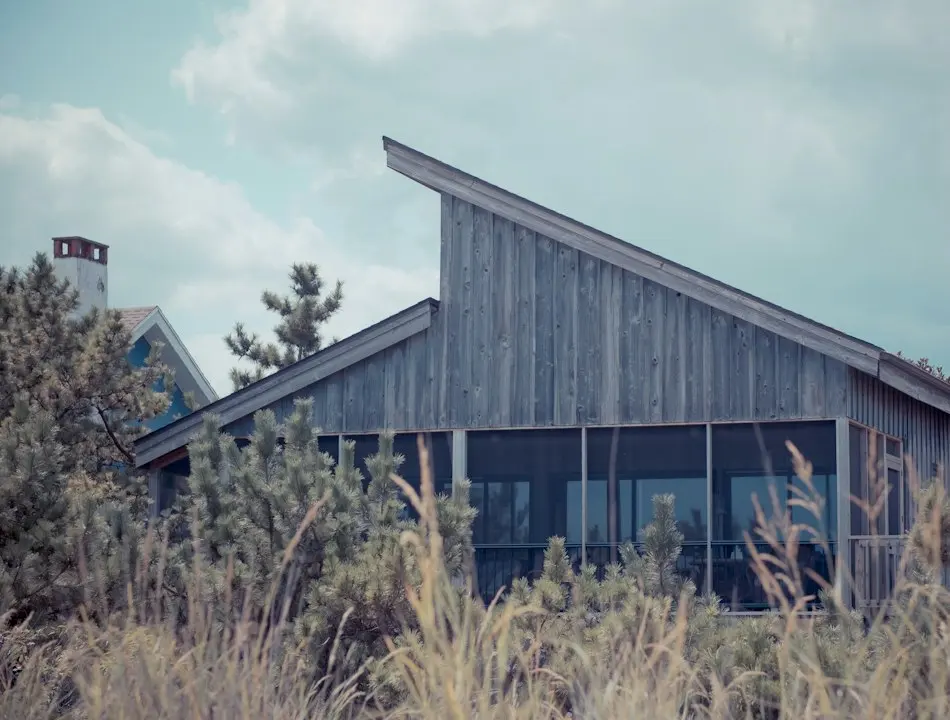
The term timber frame house covers three fairly different ways a house comes into being. The difference is not in quality but in how much is done in a factory and how much on the plot, and what that means for freedom in the design.
Built on site
The structure is built on the plot from individual members. The greatest freedom in design, the lowest demands on transport and handling, and the longest period during which the structure is exposed to the weather. It suits unusual houses, difficult access, and projects that are still being refined as work proceeds.
Panelised timber frame
Wall and floor panels are made in a factory and assembled on the plot. The advantages are accuracy and a short period with the structure uncovered. The limits are transport and handling: panel sizes and access to the plot decide what is feasible.
This is the most common option for turnkey houses today, and it is what most companies mean when they talk about a prefabricated timber frame house.
Modular house
Finished volumetric modules arrive from the factory, including finishes and often the services. On site they are placed and connected. The time spent on the plot is the shortest of all the options.
The price for that is the least freedom in layout: module dimensions are set by transport, so the layout follows the module grid. A generous open space across the whole house is harder here than with building on site.
Comparison
| Aspect | On site | Panels | Modules |
|---|---|---|---|
| Design freedom | Highest | High, within panel sizes | Limited by module size |
| Time on the plot | Longest | Shorter | Shortest |
| Weather exposure | Longest, needs careful covering | Short | Minimal |
| Access requirements | Lowest | Crane and space needed | Highest, including the transport route |
| Later changes | Easy | Easy within the layout | Limited by the module structure |
What none of it changes
None of the options changes what decides the quality of the house: the external wall assembly, airtightness, the detailing and the foundations. A modular house with a good assembly is better than a site-built house with a bad plinth, and after five years nobody will tell from where the structure was put together.
When you are choosing, keep asking the same things: which assembly, which layer provides airtightness, how the penetrations are solved and where the delivery ends.