Timber frame shell
A shell is a house that stands, with its structure, roof and external envelope in place, but with nothing finished inside. It is the usual choice for people who want to do part of the work themselves. One rule applies: the boundary of the delivery has to be written down, otherwise two quotes cannot be compared.
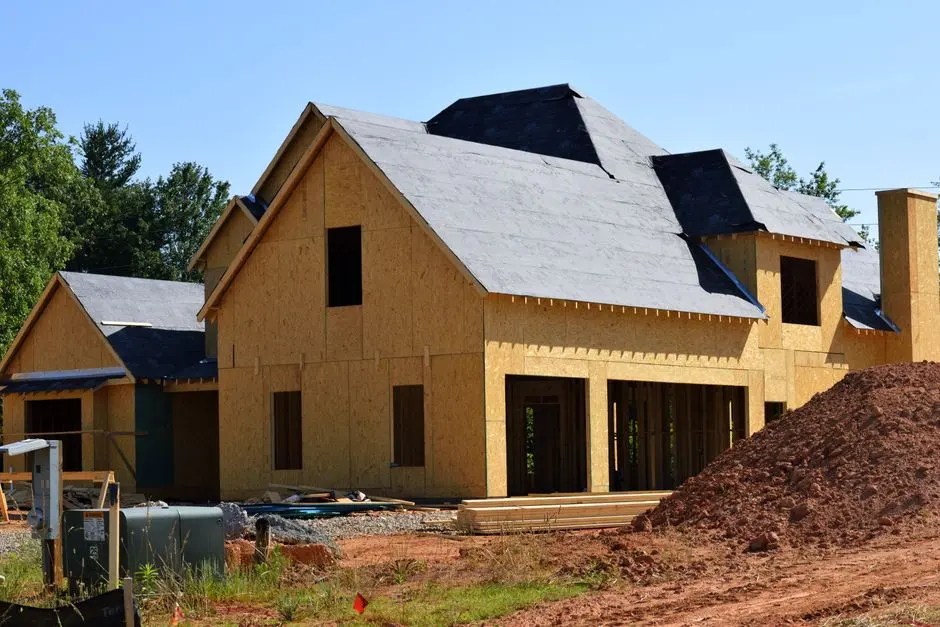
What we count into a shell
- FoundationsA slab or piers, damp proofing, service penetrations.
- StructureKVH stud framing, bracing boards, floor structure.
- RoofRoof structure, secondary waterproofing, battens, covering and sheet metal work.
- External envelopeInsulation between the studs, the airtight layer, external insulation board.
- Windows and doorsFitted and connected, where that is part of the agreement.
- Weather protectionSo the structure survives the periods when nobody is working on it.
What a shell does not include: services, heating, internal finishes, floors, tiling, painting, internal doors and fit-out.
Three levels that get confused
| Scope | What it covers |
|---|---|
| Shell | Structure, roof, external envelope. The house is closed against the weather, nothing has been done inside. |
| House to finish | The shell plus services and internal structures. Finishes and fit-out are missing. |
| Turnkey | A finished house. The scope varies between companies, which is why the quote needs an itemised list. |
What to watch when you carry on yourself
A shell makes sense if you know what you will do with it. The problems that come up after handover are usually these:
- Breaking the airtight layerDrilling through the OSB for services is the quickest way to undo the previous crew's work. That is what the service cavity is for.
- Standing unfinished for a long timeThe structure should not be exposed to moisture longer than necessary. Covering and pace are part of the plan.
- Unclear warrantyOnce you work on the structure, liability is split. Define in writing who is responsible for what.
- Missing documentationInsist on as-built documentation. You will need it for refurbishment, for a sale and for an insurance claim.
Frequently asked questions
Is a shell the cheaper option, or just a different one?
It is a different scope, not an automatic saving. You save on the work you do yourself, but part of that is eaten by time, tools, mistakes and the fact that piecemeal packages tend to cost more than the same work in one go. It mainly makes sense when you have your own people for the fit-out or you know the trade.
How long can a shell stand unfinished?
As short a time as possible. We do not quote a specific period, because it depends on the covering, the season and how the structure is secured. A closed and covered house will get through a winter without trouble, while an uncovered structure exposed to rain is a risk that is not worth taking.
Can a shell be handed over so it is clear what is done?
Yes, and we recommend it. A handover record listing the layers installed, photographs of the concealed structures and material delivery notes. You will appreciate the photos of hidden areas in five years, when you are looking for something.
Send us your brief
The more specific the brief, the more specific the answer. It helps to know whether you already have a design, what state the plot is in, and whether you want a turnkey house or only the shell.
We pass your enquiry to a building company that works in your area. If we have none there, we say so straight away instead of leaving you waiting.
Prefer to call? 775 654 443